
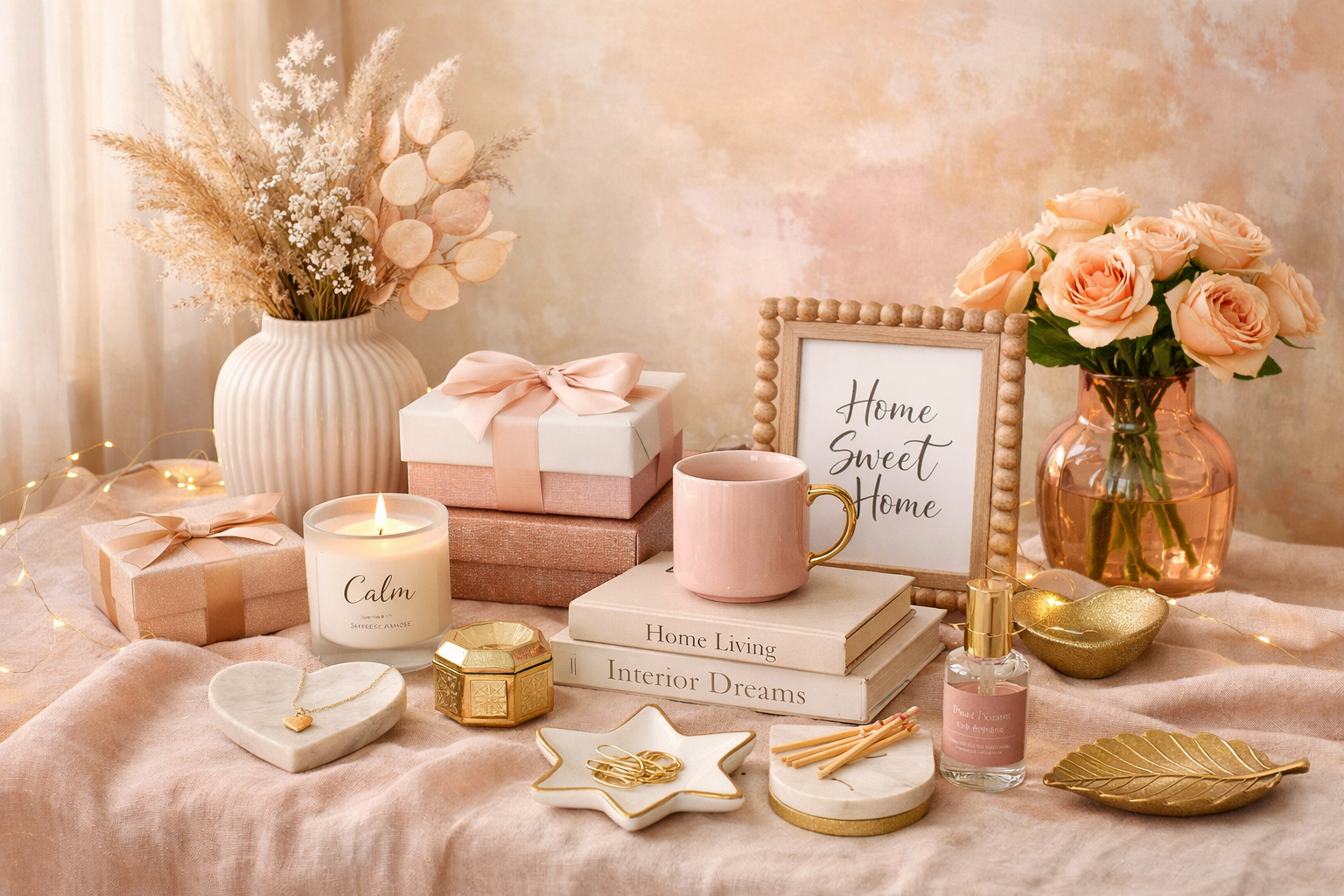
From Shelf to Celebration: Styling Home Accessories as Meaningful Gifts
There is a quiet shift happening in how people give. The floral arrangement that wilts by Thursday, the candle that gets used once and boxed away, the frame with no photograph, these are the gifts of obligation, chosen quickly and forgotten at the same pace. What’s replacing them is something more considered: objects that earn their place in a room, that get touched daily, that become part of the architecture of a life.
At Creo Living, we have watched this shift unfold across drawing rooms in Karachi, dining tables in Lahore, and entrance halls in Islamabad. The most meaningful gifts being exchanged today aren’t decorative in the passive sense. They are functional, beautiful, and specific, chosen because the giver understood not just what the recipient likes, but how they live.
This is the philosophy behind styled gifting, and it begins long before the wrapping paper comes off.
The Object That Earns Its Place
Ask anyone to recall their most cherished housewarming gift, and they will rarely describe something they put away. They will describe something they put out. A hand-carved marble tray on the kitchen counter. Sculptural bookends anchoring the shelves, they spent a weekend assembling. A refined brass tissue box resting on the nightstand, like it was always meant to be there.
These are objects with presence. They don’t ask to be noticed, they improve every surface they occupy. And because they are used daily, they carry memory in a way that decorative trinkets never quite manage. Every morning that tray receives keys and sunglasses and a phone, it’s doing quiet work: holding space, holding function, holding the small weight of a good design decision someone else made on your behalf.
This is the foundation of intentional gifting, choosing decorative items for home that earn their keep. Not because they are useful in a utilitarian sense, but because they sit at the exact meeting point of beauty and purpose that distinguishes a considered space from a merely furnished one.
Reading the Room Then Gifting Into It
Selecting a home accessory as a gift requires the same instinct a good stylist brings to a project: an understanding of how pieces relate to one another and the tonal story a room is already telling.
In the world of home decor Pakistan, where interior aesthetics have grown dramatically more sophisticated, this means looking past the generic. Polished brass accents work beautifully in spaces with warm timber and deep-toned walls. Structural metals, matte black, oxidized steel, lend quiet authority to minimalist rooms with clean lines. A hand-carved marble platter on a sideboard brings organic texture to a space that might otherwise feel too resolved.
For the gift-giver, the question is never simply “what do they like?” It’s “what does their home ask for?” A trio of candle stands for table decor in graduated heights does something specific: it brings an asymmetric rhythm to a dining table that elevates the entire room when guests arrive. That specificity, understanding how an object functions within a composition rather than in isolation, is what separates a forgettable gift from one that gets pointed out to every visitor.
The Table as the First Impression
Few surfaces carry as much social weight as the dining table. It’s where celebration happens, where hospitality is performed, where the quality of a home’s objects becomes visible to everyone gathered around it. This makes table decorations one of the most resonant gift categories in the Creo Living range.
An artisan platter in deep-glazed stoneware. A pair of angular brass candleholders flanking a low floral arrangement. A marble board whose cool, heavy surface transforms a spread of cheese and dried fruit into something styled rather than assembled. These pieces don’t just decorate a table, they change the atmosphere at it. The giver of such a piece is giving the recipient permission to host with confidence, to lay a table that communicates taste without requiring explanation.
Presentation as the First Act of the Gift
There is an argument to be made that handing over a gift is its own small ceremony, and that the outer presentation is the opening act. Premium packaging transforms even the most beautifully chosen object into an event. The weight of a rigid gift box. The resistance of a satin ribbon. The moment the lid lifts to reveal a piece resting in cushioned lining, exactly as it should be.
At Creo Living, packaging is approached with the same precision as the objects inside. A gift that arrives looking extraordinary creates emotional context before the recipient even knows what they are holding, and that anticipation, that physical engagement with something beautiful, is part of the gift itself.
Every room tells a story, let your gift be the most remembered detail in it. Visit the Creo Living website to explore our full collection of luxury gifting pieces, premium home decor, statement furniture, designer lamps, and artisan serveware crafted for those who live and give with intention.
FAQs
1. What makes a home accessory a better gift than something traditional?
A: A well-chosen home accessory integrates into daily life in a way most traditional gifts don’t. It occupies physical space in the recipient’s home, gets used and seen constantly, and carries the memory of the occasion every time it does. That sustained presence gives it an emotional longevity that flowers, hampers, or generic keepsakes rarely achieve.
2. How do I choose the right decorative piece if I’m not familiar with the recipient’s interior style?
A: Anchor your selection in material rather than color. Hand-carved marble, polished brass, and natural stone are tone-neutral and work across nearly every interior palette. Pieces with clean, geometric profiles complement both traditional and contemporary spaces. When in doubt, a single well-crafted object in a natural material is almost always the right call.
3. Are candle stands for table decor appropriate for formal gifting occasions like weddings or corporate events?
A: Absolutely. A set of refined candle stands in polished brass or structured metal reads as a considered, high-value gift in any formal context. For weddings, graduated heights in warm metallic finishes carry a celebratory quality. For corporate gifting, a single sculptural piece in matte black or oxidized brass communicates taste and restraint in equal measure.
4. How important is packaging when gifting home accessories?
A: Packaging shapes the emotional experience of receiving a gift before the object is even seen. For premium home decor pieces, the presentation should match the quality of what’s inside, with rigid box construction, quality lining, and considered closures. At Creo Living, our gifting packaging is designed to make the unboxing itself feel like part of the occasion.